01
Squash rackets
A squash racket is designed specifically for the demands of this sport. It’s important to choose a racket that suits your individual playing style and ability.
No piece of equipment makes as much difference as the choice of ball. The wrong ball is the most common reason beginners don’t enjoy the game.
A squash racket is designed specifically for the demands of this sport. It’s important to choose a racket that suits your individual playing style and ability.
Proper squash shoes give you optimum support, cushioning and stability on court. Their non-marking soles stop the court floor from being damaged while also giving you secure grip during play.
There are different squash balls, which vary in speed and bounce. Beginners should start with a slower ball that bounces higher and is less fast. As they gain experience, they can move on to faster balls.
There are only a handful of strokes in squash. The difference between recreational and league play lies not in how many you have, but in the decision: which stroke, from which position.
| Stroke | What happens | When to use it | What to watch |
|---|---|---|---|
| Length (drive) | Straight to the front wall; the ball travels back parallel to the side wall. | The standard shot. Around 60–70 % of all balls in a match. | Hit the front wall at about 1.5–2 m, second bounce behind the short line. |
| Cross-court | Diagonally to the front wall; the ball travels into the opposite back corner. | To pull your opponent away from the middle or to switch sides. | Width is crucial: aim for the side wall behind the short line, never the middle. |
| Boast | Side wall first, then front wall — the ball travels across the court to the front. | A get-out shot from the back corner, or used deliberately to bring your opponent to the front. | Enough height on the side wall, otherwise the ball dies at the front and you lose the initiative. |
| Lob | High and soft to the front wall; the ball drops into the back corner. | The rescue shot: buys you time when you’re under pressure. | Play it very high and slow. The most important shot that recreational players use too rarely. |
| Drop | Short and soft, just above the tin; the ball dies at the front of the court. | As a finishing shot when your opponent is at the back and you are stable at the front. | Soft wrist, controlled stroke. Only play it from a good position, never from the back of the court. |
| Volley | The ball is taken straight out of the air, before it bounces. | Whenever possible — it takes time away from your opponent and keeps the pressure on. | Compact backswing, firm wrist, sort out your position before the stroke. |
| Kill | Hard and flat; the ball bounces short and low. | Against a high, slow ball at the front of the court — the direct finish. | Play it into the side wall, not through the middle. Otherwise your opponent is standing right in front of it. |
| Serve | Starts the rally, with one foot in the service box. | The start of every point. Only one attempt. | High and soft onto the side wall into the back corner is the safest and most awkward option. |
The squash grip is slightly open, like a relaxed handshake: the V between thumb and index finger sits on the top edge of the handle. It barely changes between forehand and backhand — a key difference from tennis.
The ball is struck to the side of and in front of the leading foot, ideally at hip height or lower. Balls hit too late inevitably end up in the middle — which is exactly where your opponent is standing.
The backswing starts high: racket head above the wrist, elbow away from the body. If you carry the racket low, you lose a fraction of a second on every ball — and that’s exactly what you’ll be missing at the end.
A rally is rarely won by a better shot, but by one of the two players moving better. These four elements decide it.
About one step behind the short line, in the middle. From there, every corner is the same distance away. That’s your target after every shot — not some comfortable spot somewhere in between.
A small hop timed for the moment your opponent hits the ball. It loads your legs and lets you push off in any direction. Without a split step, you’re always one step too late.
The last step to the ball is the big one: a long lunge with the same-side foot, knee over the foot, upper body upright. Small steps towards the ball, one long step into it.
After the shot, your front leg pushes off actively and brings you back. Recovery is work, not rest — this is where the difference between fresh and tired in the fourth game is made.
Before you attack, you have to push your opponent to the back. Deep balls into the back corners force weak returns — and that’s where your chance comes from. Playing short from the middle just gives points away.
Under pressure, almost everyone hits harder. The opposite is right: higher and slower. A high ball along the side wall gives you time to get back to the middle — pace just gives your opponent pace back.
A drop or kill only makes sense if you’re balanced and the ball can be reached in front of the short line. Attacking from the back of the court means your opponent has less distance to cover than you do.
Up to district league level, unforced errors decide most matches. Halve that number and you’ll immediately win more games than with any new trick shot.
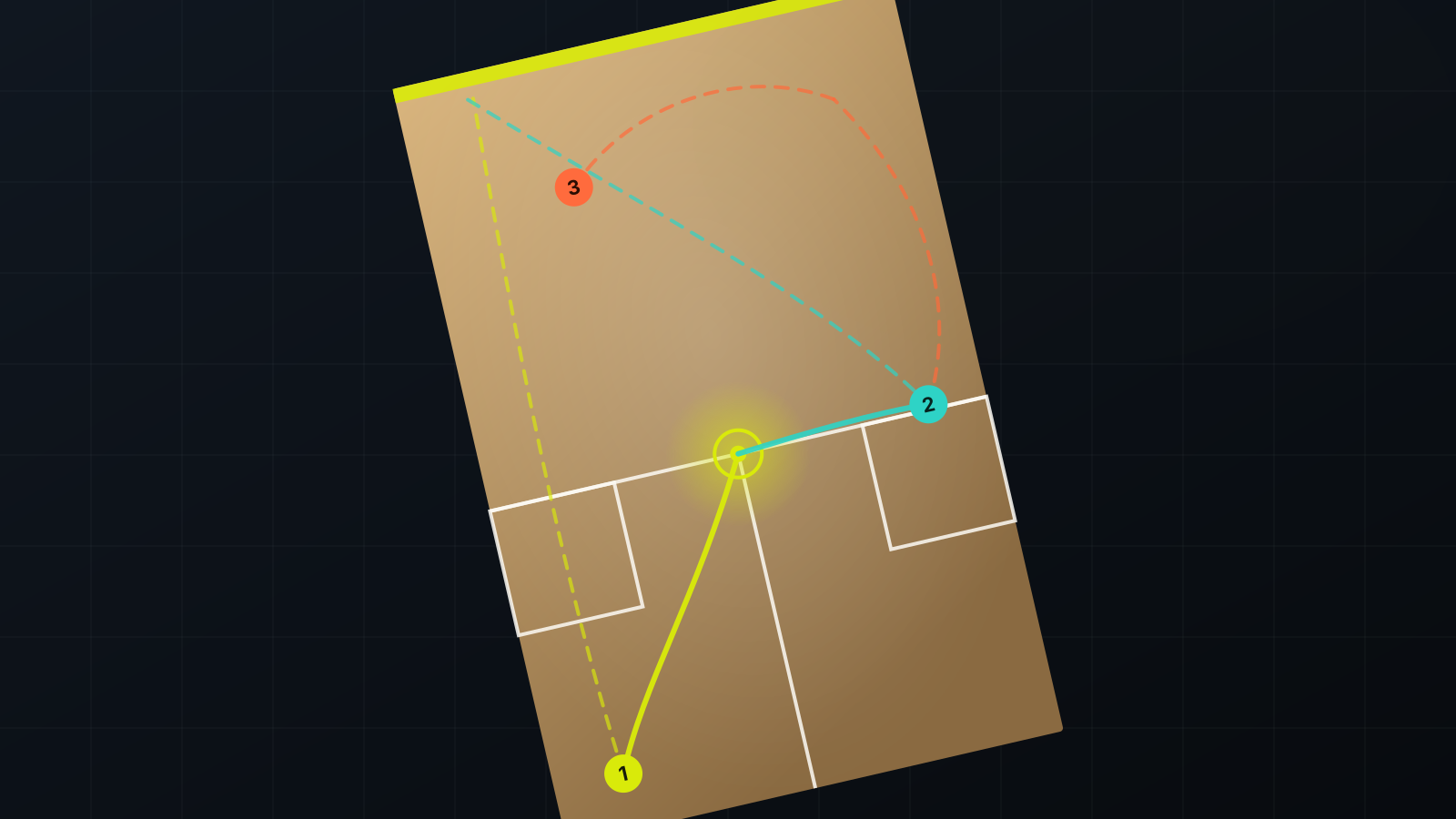
Squash is an intermittent sport: short, high-intensity efforts with incomplete rest. If all you do is long runs, you’re training for the wrong demands.
The foundation. Train in intervals of 15–60 seconds with similarly short rests — on court with ghosting and court sprints, off court with interval runs or cycling.
Lunges, squats, single-leg calf raises, hamstrings. The deep lunge position is the basic stance in squash — it has to hold up hundreds of times per match.
Every stroke comes from rotation. Forearm planks, side planks, glute bridges and rotational exercises also protect your lower back.
Hips, ankles and shoulders. Lack of ankle mobility is the most common cause of shallow, weak lunges.
Short bursts over 2–4 metres with clean braking. That’s exactly the distance you cover hundreds of times in squash — not 20-metre sprints.
Two intense sessions a week need at least a day between them. Sleep and fluids do more than any extra hour of training.
Squash is healthy and demanding at the same time. The few things you should bear in mind are quickly explained — and they take hardly any time.
Short, hard efforts with incomplete rest are a strong stimulus for your heart and circulation. It’s exactly this pattern that makes squash so efficient: a big effect in 45 minutes.
Ball, position, next shot — there’s no room for anything else. That’s exactly why many people play squash: your mind switches off because it’s busy.
Eight to ten minutes: first raise your pulse, then mobilise your ankles, hips and shoulders, then some easy hitting. Going into your first deep lunge cold is the most common route to a strain.
The ball reaches high speeds and fits exactly into an eye socket. Protective sports eyewear costs little, weighs next to nothing and prevents the one injury in squash that is truly serious. For children, juniors and in doubles it is compulsory.
The strain comes from braking and turning, not from running. Indoor shoes with good lateral support and mobile ankles take most of the load off.
Both players share the same space. If you stand still after your shot instead of clearing back to the middle, you risk being hit by a racket or ball at close range. That isn’t a minor rule detail — it’s the real reason for the rule.
Everything described here is built into the 18 sessions in the library — with a minute-by-minute plan, targets and progression.